Showing posts with label gone with the wind. Show all posts

Friday, June 8, 2012

Final Draft!

Emily Coleman
Professor Gideon Burton
English 295 Section 01
8 June 2012


“Tomorrow is Another Day”: Using the “New Day” of the Internet to Strengthen Gender Roles

In Margaret Mitchell’s classic tale Gone With the Wind, white Southern plantation owners are struggling to get through huge societal change. The Civil War and its aftermath leaves some characters helpless while others use the change to their advantage. The title itself suggests that the issues of the time period are gone with the wind; however, we may be more similar to the novel’s characters than we ever supposed. We, too, are facing the struggle of learning to deal with the onslaught of the digital age and the Internet. Many of our traditions are changing, including gender roles. However, many don’t realize that while some aspects of gender roles are being left behind, others are being strengthened. Like Scarlett and Melanie of Gone With the Wind, modern women are benefited the most when they use the great societal change of the Internet to strengthen their social role as women.

Like the white Southerners in Gone With the Wind, people are dealing with the coming of the Internet in many different ways. In the book, the elite white Southerners rush off happily to war, excited to “lick the Yankees,” but as they begin to lose the war, they start dealing not only with tragedy and heartbreak, but many difficult societal changes. They are forced to abandon their entire way of life. Many don’t have the skills or the guts to find their way in the new society. The South is taken over by Carpetbaggers and “white trash,” while the former elite are left trying to figure out where their old ways have gone. The societal changes faced by the Southerners are remarkably similar to the changes our society is going through today. With the coming of the digital age, some are still shell-shocked, unable or unwilling to come to terms with the technology that is taking over our lives. The Southerners in Gone With the Wind faced many of the same challenges. Ashley Wilkes, an able, educated plantation owner prior to fighting in the Civil War, never recovered emotionally after his return, living off the charity of others and unable to take care of his own. Like Ashley, some of us who thrived before the digital age are now finding themselves helpless without the necessary skills to succeed in a world run by technology. Many, however, are using the powerful tool of the Internet as a new way to manage their social life, particularly women.

Monday, June 4, 2012

“Tomorrow is Another Day”: Using the “New Day” of the Internet to Strengthen Gender Roles--First Draft


Here is the first draft of my paper. The citations are (obviously) messed up and I still need to provide documentation, it's not quite long enough, and it needs a lot of work. I would love to get your feedback.

Gone With the Wind, by Margaret Mitchell, is a story of Southern plantation owners trying to live through the Civil War and its aftermath. In the book, the elite white Southerners rush off happily to war, excited to “lick the Yankees,” but as they begin to lose the war, they begin dealing not only with tragedy and heartbreak, but even more difficult societal changes. They are forced to abandon their entire way of life. Many don’t have the skills or the guts to find their way in the new society. The South is taken over by Carpetbaggers and “white trash,” while the former elite are left trying to figure out where their old ways have gone.

The South of the 1800s may be gone with the wind, but the societal changes faced by the Southerners are remarkably similar to the changes our society is going through today. With the coming of the digital age, some are still shell-shocked, unable or unwilling to come to terms with the technology that is taking over our lives. Many, however, are using the powerful tool of the Internet as a new way to manage their social life. In particular, women are using social networking tools to expand their social reach. As a result, women are expanding their traditional gender role while, at the same time, preserving it. 

The characters of Scarlett and Melanie from Gone With the Wind are two distinct and opposite examples of ways that women were and are able to deal with great societal change. Melanie is depicted as the picture of femininity. One of her most traditionally feminine characteristics is her social grace. For many years, women have been considered more social than men. Before the war, Melanie is a graceful hostess, knows everyone and never says a bad word about anyone. She is a sweet, reserved Southern belle, never stepping beyond the path prepared for her. However, she doesn’t cower from the tragedy of the war. Instead, Melanie uses the Civil War and the Reconstruction as an opportunity to expand the definition of femininity. 

Similarly, many women of the digital age are expanding their gender role. Women continue to be the more social gender. Research shows that the numbers of female users of social networking tools like Facebook and Twitter far exceed the numbers of male users. In the words of Elisa Camahort Page, co-founder of BlogHer: “In general women adopt social networking tools more highly than men, and they are more engaged and active on those tools. . . . Women are actually the majority user base for most social tools online.” Women are seeking social relationships, but like Melanie, they want to expand their social network and meet people that, without the Internet, they would never have been able to connect with.

Tuesday, May 29, 2012

"Frankly, My Dear...": Women Changing the World Through the Internet

Gone With the Wind is a story of Southern plantation owners trying to get through the pain and tragedy of fighting, losing, and rebuilding after the Civil War. After the Southerners lose much of their way of life, they are forced to deal with huge societal changes in the best way they can. Some of them, like Ashley Wilkes, are stuck in the past, unable to move forward. The two main female characters, Scarlett and Melanie, represent the ways in which women were able to break social boundaries for their gender while at the same time remain true to their identities as women. Like Scarlett and Melanie from Margaret Mitchell’s Gone With the Wind responded to the Civil War and Reconstruction, women today are responding to the new digital age by using the Internet to break social boundaries while preserving their traditional gender role.


Scarlett and Melanie show the importance of women's traditional role as social butterflies. Women are generally considered more relationship-oriented than men are. In GWTW, Scarlett eventually gets fed up with always trying to please other people, and eventually abandons any attempt to build good relationships. She turns to her love of money, running a business and marrying rich Rhett Butler. In the end of the book, Rhett concludes that one of the only things Scarlett ever wanted was "to be rich enough to tell the world to go to hell." And where did Scarlett end up?


Alone. 

Melanie, on the other hand, uses the societal change as an opportunity to both preserve and transform her social role. She is not afraid to befriend Belle Watling, a prostitute, which would have been impossible for her before the war. She volunteers at a war hospital, which again, would have been impossible without the Civil War. Rather than abandoning her gender role, Melanie expands it. 

Friday, May 25, 2012

Social Discovery!

As I'm getting more into my topic, I'm realizing that I really can't understand it without social proof. I can't understand women's personal experiences online without hearing what they have to say.

Here are the people I've contacted so far.

A while back I commented on a review of Gone With the Wind by Jillian, a book blogger, on A Room of One's Own. She responded pretty quickly with some great insights on Scarlett's character (I quoted her in a previous blog post). I want to talk to Jillian more now that I have some more concrete claims. I think (well, I hope) that Jillian might be interested in linking GWTW and women's experience online, since she loves GWTW (she's currently doing a reading project on Margaret Mitchell) and she's a blogger herself.

I emailed some professors who had courses that included GWTW. Professor Luesebrink, a teacher of a Popular Literature class, emailed me back!...But she didn't have much to say in response to my questions. I had asked her about the popularity of GWTW and she said that she didn't really know much about it. I asked her how she thought the 1939 film influenced the way people viewed the story (the question I was most interested in hearing the answer to) and she said she thought it influenced people, but she couldn't really say how. Ironically, she suggested that I do a web search...which is how I found her syllabus! It was cool to get a response from her, though.

This week, I decided to contact some women that I already know who have used the Internet as a force for good. I sent a Facebook message to Susan Taylor, who is changing lives through her business, Living Equilibrium. She got back to me right away with some AWESOME responses on both the good and the bad of the Internet. She also gave me permission to share her responses here, so I'll have a blog post about that soon!

Wednesday, May 23, 2012

Being Melanie in the Digital Age: A Practical How-To Guide

As I wrote in my last post, Melanie from Gone With the Wind is a great example of using external change--even difficult external change--to broaden her horizons and to reach her potential as a woman. Women, much more than men, are using the Internet as a social place, to help, support, and encourage one another.

Check out this diagram:


(Click here for the original diagram.)


Take a look at the different websites that men and women are involved in. Women dominate not only in some of the most extremely popular social networking sites--Facebook, Twitter, and Myspace--but also in websites that are devoted to helping each other create, like Pinterest and Instagram. And when it comes right down to it, there are 99 million more female visitors monthly to social networking sites than there are male visitors.

Women are naturally good at using the Internet for social purposes. Due to the current efforts of many remarkable women, technology is shifting away from being a traditionally masculine, male-dominated area of interest and work. Melanie used the circumstances involved in the Civil War as an opportunity to reach out and do different things and talk to different people than would have been possible in the society that existed before the war. We, as women in the new millennium, can treat the transition into the digital age with the same kind of optimism and innovation. Here's how...

Tuesday, May 22, 2012

Women and the Web: Are You a Scarlett or a Melanie?

After my research and talking with my professor, I've narrowed down and figured out the comparisons and the points that I want to make between gender, Gone With the Wind, and the new media.

In a previous post I mentioned that the Internet is a gender-neutral place. That's what I thought at first--but it's not. Actually, I'm prepared to make the opposite argument: that current use of the Internet is actually amplifying traditional gender roles.

Think about it. You could look at a blog and probably be able to guess the blogger's gender before you read a single word. What are women using the Internet for? Women's main use of the Internet is not to neutralize gender and enter more into masculine roles; women use the Internet to help them cook, sew, shop, make handicrafts, cut hair, do makeup--all traditionally feminine pursuits.

But women aren't using the Internet simply as a means to a traditional end. They're using it to be part of a social community. Women, much more than men, are using the web to connect with others who share their interests, hobbies, and goals. They use it as a way to reach out, to find support and to help others.

Melanie, from Gone With the Wind, is a perfect example of social connection. Throughout the Civil War, Melanie seeks the company of other women, looking to connect with them and support them. Melanie isn't afraid to reach outside of her social circle from before the war; she's even willing to befriend Belle Watling. Similarly, women are taking the dawn of the new media as an opportunity to step outside of their geographically bound social circles and connect with people from all over the world. Women are building new communities with each other and creating social ties--something women have always done, but now they're able to do it in a new way.

Saturday, May 19, 2012

Gender...Online

Yesterday I was doing some serious thinking on my topic and realized, as I was trying to research, that my topic is far too broad. And--I'm going to have an honest moment here--the kind of research that I was looking at was boring to me. Yes, boring. Not the GWTW part, but trying to relate it to people in general's responses to external change. Well, okay--maybe it wasn't so much boring as it just didn't seem to matter. 


Before the Civil War, Scarlett tries
to convince Mammy to tie her corset
as tightly as possible.
So I had a thought to stay on the same path but narrow it a lot down to gender roles and specifically, femininity. How does this relate to what I've been blogging about for the past while? Well, I want to look at how the Civil War completely changed the way women viewed themselves and their place in society. Scarlett is quite the picture of the strong, independent woman (by the end of the book, anyway). The other Southern women find it very difficult to let go of their old ways, but Scarlett is willing to move on and doesn't care what anyone thinks of her. Melanie is much the same, in her own way, willing to talk to Belle Watling and witness gory surgeries in the war hospital. The war forced the South to rethink the gender roles in their society.

So how does this relate to digital culture? Well, I was talking to Holly and Whitney, the other members of my cohort about this. I think one big aspect of digital culture is anonymity--even to the point where you can conceal your gender. The Internet is a pretty gender-neutral place. Even if you share your gender (which most people do), most of the time no one is looking at your face or seeing your body. Gender is not necessarily at the forefront of our consciousness.

I've come up with some more thoughts on this over the past day, as well. With the Internet, women can forego a lot of traditional practices that society has come to expect from them, like dressing up and wearing makeup. On the Internet, a woman has the opportunity to make friends, get a job, or fall in love while wearing a bathrobe and bunny slippers. This mirrors what happens in Gone With the Wind as well; in the beginning, a woman's appearance is very important. Have a tiny waist, wear gigantic dresses, don't eat too much in front of men, etc., etc. But during and after the Civil War, no one really cares what anyone else is wearing; they just wear whatever is practical.  This thought isn't fully formed yet, but it's an idea.

A last thought is that despite the many gender-neutral aspects of the Internet, there are still some clearly defined gender roles on the web. There are a lot of websites specifically geared toward women. Recently I found a great website for women writers called She Writes. Just yesterday I heard my professor say that he doesn't like using Pinterest because it makes him feel less manly. There are countless blogs dedicated to motherhood, cooking for a family, sewing, arts and crafts...all traditionally feminine activities, and the blogs themselves are highly geared toward women.

Basically what this comes down to is that the Internet seems like it can be used either to diminish or increase the importance of gender roles in our society. How do you see gender roles changing (or maybe staying the same) in our digital world? Any thoughts on all this?

(Annotated bibliography soon to come...)

Friday, May 18, 2012

Can We Really Change?

As I wrote in my last post, the Southern way of life in Gone With the Wind changes dramatically with the Civil War. This external change affects not only the way of life, though; it changes the characters themselves.

Scarlett: Scarlett probably goes through more changes than any of the other characters. She starts out as a foolish child who wants nothing more than to catch as many beaux as possible. She wants to be petted and taken care of. However, by the end, Scarlett becomes much more than a silly girl. She becomes a survivor, a bussinesswoman, a plantation manager, and yes, even a murderer. She is a woman who can and will do anything to save herself and those closest to her from ruin, hunger, or death.

Tuesday, May 15, 2012

The Second Civil War

Gone With the Wind is so multifaceted, it's hard to say exactly what sort of a book it is. It's a romance, a war novel, a historical novel, a commentary on race, gender, society, culture... In many ways, I honestly didn't know where to start with this book. There are so many different places I could go with it.
A picture I found on Tumblr that I just had to share...

I've looked for topics of discussion that are current. Professors tend to focus on how the novel portrays race and racism or gender. Many of the somewhat more intellectual enthusiasts on Goodreads and blogs like to talk about the book as a representation of the South and how it was changed through the Civil War. But the general population of enthusiasts likes to focus on one aspect of the story: Scarlett and Rhett.

These are all very interesting critical topics in themselves, and I've decided to consider and think about all of them.

One of the big themes I see in GWTW is the idea of change. All the characters go through a change in their way of life, in their relationships, in their country, in their homes...exactly the same thing that is happening today as we transition into the digital age.

Okay, not exactly the same thing. I certainly don't want to trivialize the suffering involved in the American Civil War. But I see a lot of similarities between our time and theirs.

A gigantic external change is taking place, completely changing our way of life. A way of life that was, in many ways, beautiful in its slow and thoughtful pace, dreamy and wistful...but, at the same time, inadequate. A change is not only impossible to escape, it is necessary. But this change isn't easy. We have hurdles to face; we don't know how to adapt to the new world, we don't have the necessary skills to survive in it. Many people cling to the old ways and refuse to change. Others are adapting quickly and are capitalizing on the change, becoming rich in ways they never had been able to before. Some refuse to get mowed down and even though it's hard, they're plowing right into the new world, determined to use it to their advantage. But no matter who we are, the change is having an effect on our relationships, the way we view others, the way we view ourselves, how we work and how we live. Despite the difficulties of transition, the change promises a brighter tomorrow.

See the connection? That entire paragraph could describe either the Civil War or our current transition into the digital age.

So I'm going to focus on change and look at how each of the characters adapted to it. I might also look at how the story itself has been and is being adapted to fit our time. I'm excited to dig deeper into this book!

Monday, May 14, 2012

Scarlett O'Hara's Prerogative

I've discovered that the homemade Youtube music video is alive and well in 1800s Georgia.

I didn't expect much from GWTW music videos, but I actually really enjoyed them! Not to mention, I thought they were very interesting interpretations of the story and the characters (mainly Scarlett).

This video is set to the song "Apologize" by OneRepublic. At first, I found it ridiculous and nearly laughed my head off in the computer lab. I mean, come on--do you really think OneRepublic could beat the amazing original score? It seemed to trivialize the story to put it to a modern song.

Friday, May 11, 2012

Scarlett O'Hara: Role Model

Fan art of GWTW that I found yesterday
that makes me laugh...
I checked out a blog I happened upon with a review of Gone With the Wind. The author is pretty cynical, which I love. You can find the original blog post here (but as a warning, there's quite a bit of language in it).

One thing the author said really got me thinking about Scarlett's character:

"...If she were nice EVERYONE ELSE IN THE BOOK WOULD DIE. I'm not saying I want to be her friend, but I am saying that if she were around in the days of Margaret Sanger we'd all be working for her worldwide empire."


I've never thought about Scarlett in exactly that way before. I've always thought of her mean-ness as a character flaw, not as a strength, but this blogger makes a really good point; if Scarlett were a nice person, would any of the major characters still be alive by the end of the book? Scarlett has the guts to shoot an intruding Yankee dead, marry her sister's beau for his money, force her family to work on the plantation, and plenty of other things that are, frankly, just not nice. Yet, those were the things that saved lives.

I've found it interesting as I've explored deviantART and Tumblr that some people say that they love Scarlett because she's the symbol of female empowerment. My first thought was...What? Who actually likes Scarlett? Understand her, sure; respect her, even; but look up to her as a role model? I just didn't get it.

But the more I look at people's understandings of the book and film through art and writing, the more I see how much people really do connect with Scarlett's character. She may not be nice, but people admire her strength and power. People want her kind of power. Maybe it's a deep American desire that gives people an immediate kinship with Scarlett's passionate, volatile character.

Thursday, May 10, 2012

Gone With the Wind Art


Pencil drawing of Gable and Leigh


Today I tried looking on deviantART to see what different takes people had on Gone With the Wind. I was surprised at some of the various ways people applied the story.


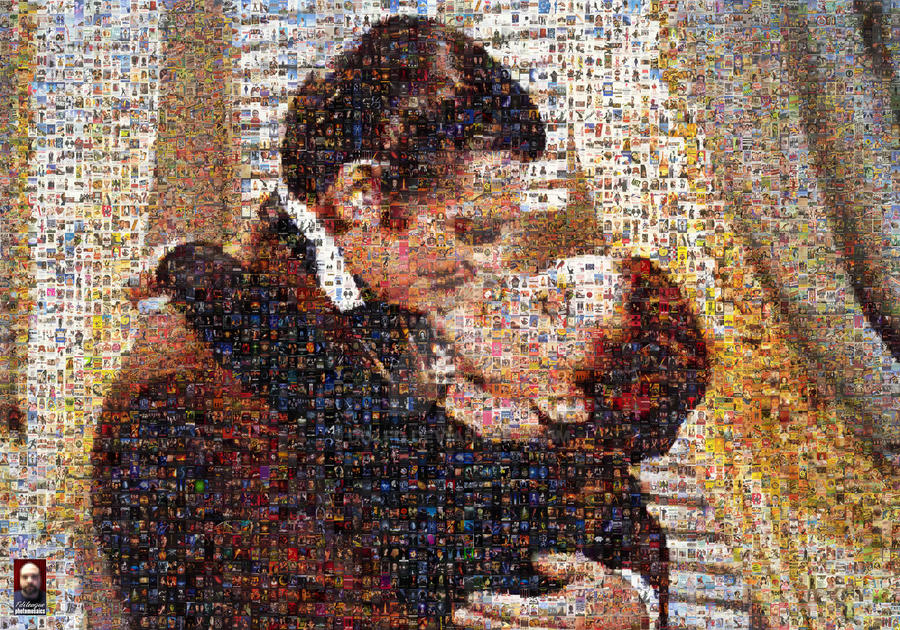
A lot of the art were drawings of scenes from the film, which wasn't too surprising. Some people added different effects to these scenes, like this picture mosaic. 


Others took these scenes a step further by replacing Clark Gable and Vivien Leigh with their own characters.

Tuesday, May 8, 2012

Gone With the Wind: On Paper and On Screen

Nearly all Americans have seen Gone With the Wind. The film is an American classic, like Singin' in the Rain or The Sound of Music. Interestingly, the book by Margaret Mitchell is not nearly as often talked about. The book lies in the shadow of the iconic movie.

So, in my research on Gone With the Wind, I really had no choice but to re-watch the film. The last time I watched it was right after I had first read the book, and I could hardly watch it all the way through. It seemed so petty and childish compared to the novel, no more than a weak attempt to imitate the deep emotion of the original story. I couldn't understand why the movie is so famous. 

But this time I felt differently. My last post was a pretty good segue into this topic because the question of Book vs. Movie is extremely important in the conversation about Gone With the Wind. This time, I could really enjoy and appreciate the film version. I tried to look at it with the same views I expressed in the last post, remembering that the film and the paper versions ought to be very different. 

So which is better: the book or the movie? 

Friday, April 27, 2012

Gone With the Wind

For a long time, I've been feeling a lot like Scarlett O'Hara, saying, "I'll think about that tomorrow. After all, tomorrow is another day." That's largely how I've been approaching the idea of getting connected in the digital age. I've dabbled a little in tons of social websites, but as far as actually making it worthwhile and not just a waste of time? I'll think about that tomorrow.

So I think it's only appropriate that I write about Gone With the Wind. Like Scarlett, even though I say I'm not going to think about it until tomorrow, eventually tomorrow comes and I have to act. And I guess tomorrow has come with this class and with this blog. 

But there's more to my decision than just a personal connection with Scarlett O'Hara. Gone With the Wind is one of my favorite literary works for plenty of reasons, but one of the most important is that it's real. I mean, it's a novel; it's not a true story. And it takes place more than a century ago, so it doesn't depict any current situation. Yet, despite its fiction, the characters are real. There are no black-and-white good guys and bad guys. Scarlett herself is a perfect shade of gray, yet an evolving, changing shade. She starts out young and naive and, throughout the novel, grows into a woman who has no choice but to take care of herself in the best way she can. She is neither a "good guy" nor a "bad guy." She's an actual human being. The same is true of the rest of the characters, even angelic Melanie. Mistakes are made. Character is formed. People grow older. This is life. And Margaret Mitchell has captured the essence of life in a novel so we can examine it safely from outside the glass wall of fiction.